Full-Funnel Growth and Conversion Optimisation
Project Overview
What: End-to-end growth and conversion optimisation initiative
Where: Ara Institute of Canterbury, large education and services organisation with complex digital acquisition and enrolment flows
Primary Focus: Growth strategy, lifecycle marketing, full-funnel optimisation, marketing operations
Project Context
Growth performance was constrained by fragmented ownership across the acquisition and enrolment funnel. Marketing, digital, academic, and operational teams each optimised individual stages, but there was no shared view of the end-to-end customer journey or aligned accountability for conversion outcomes.
This resulted in inconsistent messaging, unclear handoffs, limited visibility into conversion leakage, and missed opportunities to improve early-stage performance at scale.
Objective
To improve early-stage conversion and overall funnel performance by establishing a shared, end-to-end growth model that aligned teams, clarified ownership, and reduced friction across key transition points.
Success was defined as measurable conversion improvement, clearer accountability, and sustainable changes embedded into BAU operations.
My Role
I acted as strategic growth lead, working cross-functionally across marketing, digital, enrolment, and academic teams. I was responsible for diagnosing system-level issues, designing the optimisation approach, and driving alignment and execution without direct line authority.
Approach
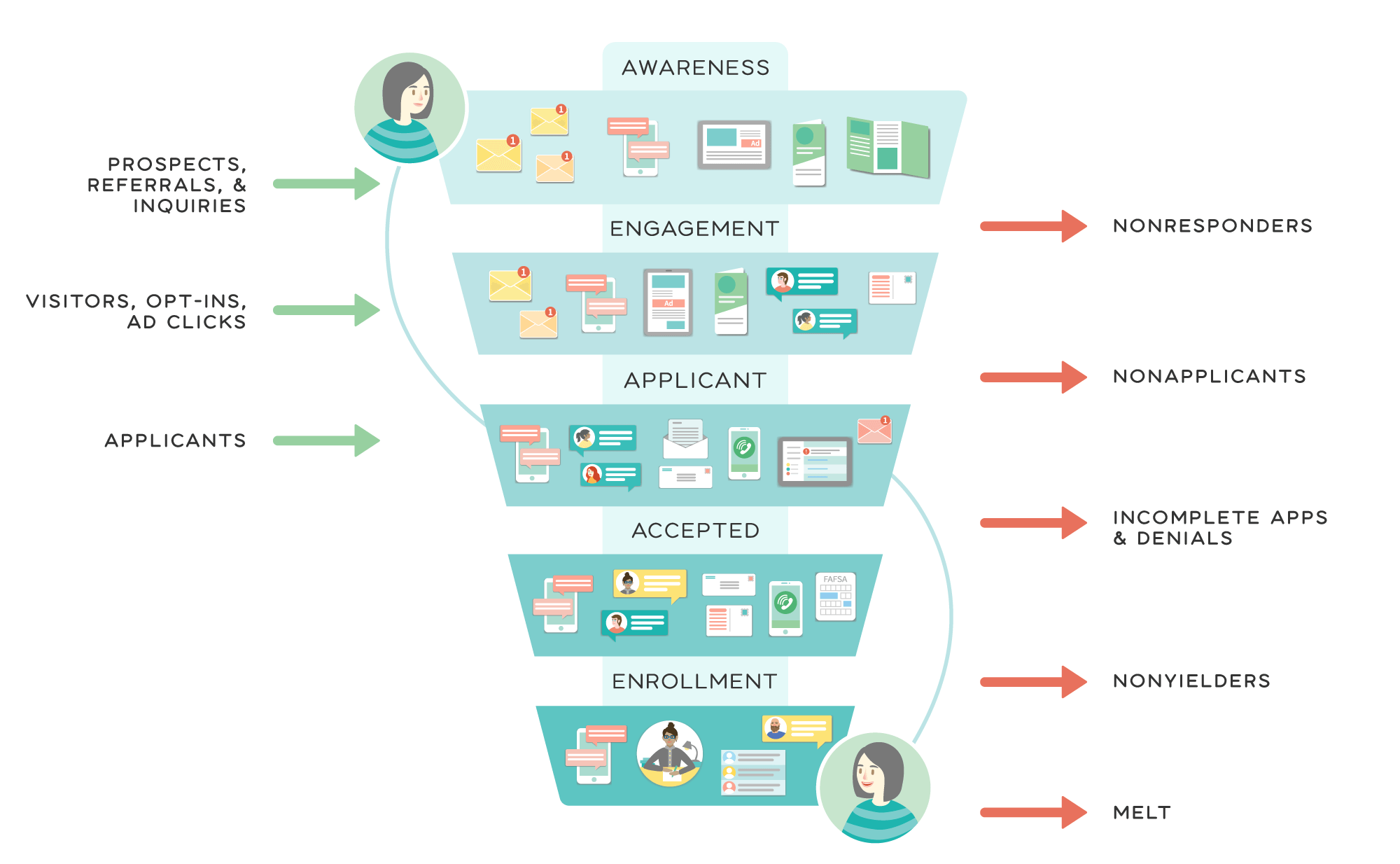
Mapped the full customer journey from first touch through to activation
Analysed behavioural and performance data to identify drop-off points
Defined clear funnel stages, ownership, and success metrics
Improved sequencing and consistency of lifecycle messaging
Embedded shared KPIs across acquisition, application, and enrolment teams
This work was informed by postgraduate research into digital transformation and operating model design, ensuring changes were structural rather than campaign-level.
Key Deliverables
End-to-end funnel and lifecycle model
Funnel stage definitions and handoff criteria
Cross-functional KPI framework
Messaging and UX improvements embedded into BAU workflows
Proof Points
10% improvement in early-stage conversion within three months (approximate, directional)
Shared funnel model adopted across marketing and enrolment teams
Clear ownership and KPIs embedded into ongoing operations